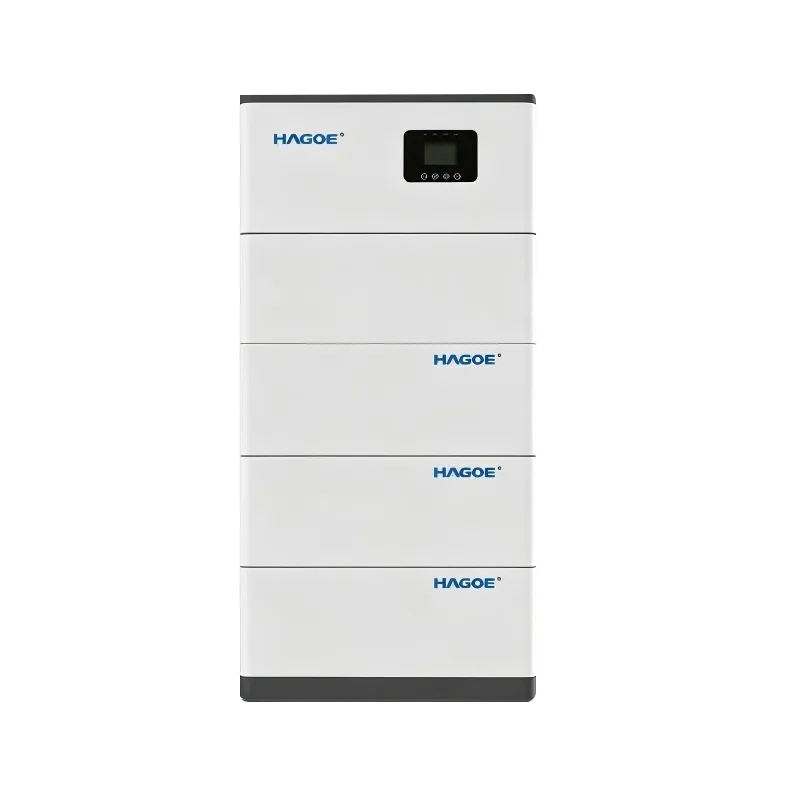
For homeowners seeking greater energy independence, HAGOE Home Energy Storage Power Supply provides a practical way to store electricity, manage household energy consumption, support solar power generation, and maintain backup power during grid interruptions. With modular LiFePO₄ battery configurations from 5.12kWh to 20.48kWh, the system combines battery storage, BMS, inverter control, and EMS energy management in one coordinated residential energy solution.
A modern home energy storage system is no longer simply a battery connected to a solar installation. It is an integrated energy platform that coordinates electricity generation, storage, conversion, monitoring, and household consumption. A well-designed Home Energy Storage Power Supply can store surplus solar electricity during the day, discharge stored energy when household demand rises, support selected loads during power outages, and help optimize electricity consumption under time-of-use tariffs.
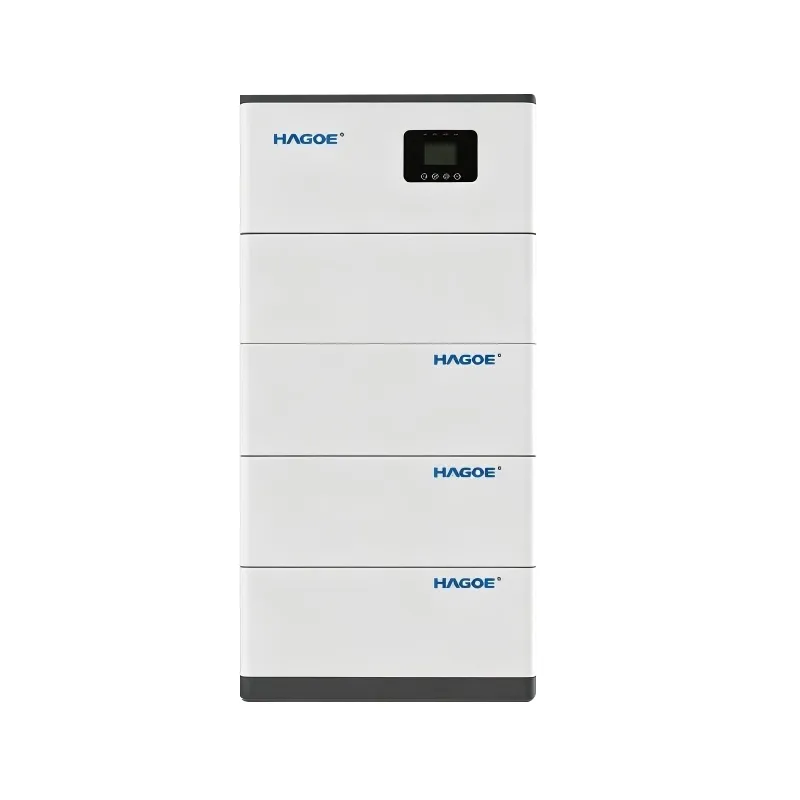
A Home Energy Storage Power Supply is an integrated residential electrical system designed to store electricity and make that energy available when required. Unlike a standalone battery, a complete system can incorporate battery modules, a Battery Management System (BMS), power conversion equipment, an Energy Management System (EMS), communication interfaces, and multiple safety protections.
The basic energy cycle can be summarized as:
Energy Generation → Energy Management → Battery Storage → Power Conversion → Household Loads
For homes equipped with photovoltaic panels, excess electricity generated during periods of strong sunlight can be directed into the battery rather than being immediately consumed. The stored energy can subsequently be used during evening hours, peak electricity periods, or selected grid-outage conditions.
This approach can help homeowners increase solar self-consumption while creating a more flexible household energy strategy.
A residential energy storage system typically coordinates three major functions: energy storage, power conversion, and energy management.
For time-of-use electricity pricing, a typical operating strategy may look like this:
| Period | Energy Strategy | Typical Objective |
|---|---|---|
| Off-Peak Hours | Charge battery | Prepare stored energy for later consumption |
| High Solar Production | Store surplus PV electricity | Increase solar self-consumption |
| Evening Peak | Discharge battery | Reduce dependence on higher-cost grid electricity |
| Grid Outage | Supply designated loads | Maintain power continuity for critical equipment |
Actual energy savings depend on local electricity prices, solar generation, household consumption patterns, system efficiency, battery operating conditions, and the selected energy management strategy.
HAGOE offers a modular residential storage platform designed to accommodate different household energy requirements. Its available configurations range from 5.12kWh to 20.48kWh.
| Model | Battery Configuration | Nominal Energy | Rated Output Power | Dimensions (L×W×H) |
|---|---|---|---|---|
| HSP-5kWh | 100Ah / 51.2V | 5.12kWh | 3000W | 637×387×914mm |
| HSP-10kWh | 200Ah / 51.2V | 10.24kWh | 6000W | 637×387×914mm |
| HSP-15kWh | 300Ah / 51.2V | 15.36kWh | 6000W | 637×387×1236mm |
| HSP-20kWh | 400Ah / 51.2V | 20.48kWh | 6000W | 637×387×1397mm |
The system uses a 51.2V nominal battery platform, supports a 125–500V solar charging input, and provides Wi-Fi and Bluetooth connectivity through a mobile APP. RS485 and CAN communication interfaces support system integration and monitoring.
For buyers comparing a China home energy storage manufacturer, technical specifications should be evaluated together with battery chemistry, protection functions, communication capability, certification, manufacturing quality, and after-sales technical support.
Battery chemistry directly affects the performance, safety, operating characteristics, and expected service life of residential energy storage equipment. HAGOE's system uses Lithium Iron Phosphate (LiFePO₄) battery technology.
The platform is specified to retain more than 80% of its capacity after 3,000 cycles under the stated test conditions. However, actual battery life depends on factors such as:
This is why battery cycle-life specifications should be considered alongside real-world operating conditions rather than interpreted as a guaranteed service period.
One of the most common applications is storing surplus solar electricity generated during the day. Instead of allowing excess PV energy to remain unused, the system can store it for household consumption later.
A residential energy storage system can provide backup power to selected loads during utility interruptions, depending on the inverter, electrical configuration, and installation design.
Where electricity prices vary by time of day, stored energy can be strategically discharged during expensive periods. This can help reduce grid electricity consumption during peak tariff windows.
Combining photovoltaic generation with battery storage creates a coordinated residential energy ecosystem. Solar generation, household loads, battery state of charge, and grid electricity can be managed as part of one energy strategy.
A reliable energy storage system requires more than high-quality battery cells. The control architecture is equally important.
The Battery Management System (BMS) focuses primarily on battery operating conditions and protection. It monitors parameters such as voltage, current, temperature, and battery protection status.
The Energy Management System (EMS) operates at the system level. It can coordinate energy flows according to factors including:
HAGOE combines BMS and EMS functions with Wi-Fi, Bluetooth, mobile APP, RS485, and CAN communication capabilities, creating a more manageable platform for residential energy monitoring and control.
Selecting a battery solely according to its advertised kWh capacity can result in an improperly sized system. A better approach is to begin with actual household energy requirements.
Consider the following factors:
A useful planning framework is:
Required Storage = Critical Load Demand × Required Backup Time ÷ System Efficiency
This is a simplified planning concept rather than a final engineering calculation. A professional system design should account for usable battery capacity, inverter limits, operating reserve, environmental conditions, and local electrical requirements.
Residential batteries operate with significant stored electrical energy, making comprehensive protection essential. HAGOE's system incorporates multiple protection functions covering different abnormal operating conditions.
| Protection | Purpose |
|---|---|
| Over-Temperature Protection | Helps protect the battery from excessive temperature conditions. |
| Over-Voltage Protection | Helps prevent abnormal battery voltage conditions. |
| Over-Current Protection | Helps control excessive charging or discharging current. |
| Over-Charge Protection | Helps prevent charging beyond defined battery limits. |
| Over-Discharge Protection | Helps protect the battery from excessive discharge. |
| Short-Circuit Protection | Helps respond to load-side short-circuit conditions. |
| Overload Protection | Helps protect the system when connected loads exceed designed limits. |
Battery protection does not replace correct installation. Appropriate breakers, isolation devices, grounding, wiring, ventilation, and other electrical protection measures should be selected according to the local electrical code and professional installation requirements.
Established in 2008, Hagoe Electric Technology Co., Ltd. integrates R&D, engineering design, manufacturing, sales, and global service. The company has more than 18 years of experience in power electronics, power distribution systems, and new energy electrical equipment.
HAGOE reports a registered capital of RMB 51 million and more than 34 national patents. Its broader new-energy portfolio includes PV energy storage systems, solar inverters, intelligent DC systems, and integrated outdoor power systems.
The company's quality management framework includes ISO9001, ISO14001, and ISO45001 management systems. Its production process covers incoming inspection, battery module assembly, BMS connection and verification, electrical assembly, system commissioning, protection verification, aging testing, and final inspection.
For international projects, HAGOE can provide technical specifications, inspection documentation, certification documents, installation manuals, export documentation, production tracking, and remote technical support according to project requirements.
These capabilities are particularly relevant for distributors, system integrators, installers, and project buyers looking for a Home Energy Storage Power Supply supplier that can provide both equipment and engineering-oriented support.
A battery primarily stores DC electrical energy. A complete home energy storage system can additionally integrate battery management, power conversion, energy management, monitoring, communication, and protection functions, allowing the system to coordinate solar generation, household loads, and grid electricity.
Yes. The HAGOE system supports a 125–500V solar charging input and can be configured for residential PV energy storage. The final PV configuration should be matched with the inverter specifications and local installation requirements.
It depends on the actual load. As a simplified example, 10kWh of theoretical energy could correspond to approximately five hours at a continuous 2kW average load before accounting for conversion losses, usable state-of-charge limits, and other system losses.
Depending on the selected inverter and system configuration, the equipment can support grid-charging and backup applications without PV. Solar integration can be used when the system is configured with suitable PV input.
The specified performance is more than 80% remaining capacity after 3,000 cycles under the stated conditions. Actual service life varies according to operating temperature, depth of discharge, charge/discharge rate, and energy management strategy.
A modern Home Energy Storage Power Supply can play an important role in residential energy management by connecting battery storage, solar generation, power conversion, intelligent controls, and backup functionality. HAGOE's modular 5.12kWh–20.48kWh platform, LiFePO₄ battery technology, integrated BMS and EMS, multiple protection functions, and communication capabilities provide a flexible foundation for different household energy requirements. For homeowners, installers, distributors, and project developers evaluating a reliable residential energy storage solution, choosing the correct capacity and system configuration is just as important as choosing the battery itself. If you are sourcing a customized residential energy storage solution, evaluating project requirements, or looking for a professional China manufacturer and supplier, contact us to discuss your application, technical specifications, and energy storage requirements with HAGOE.