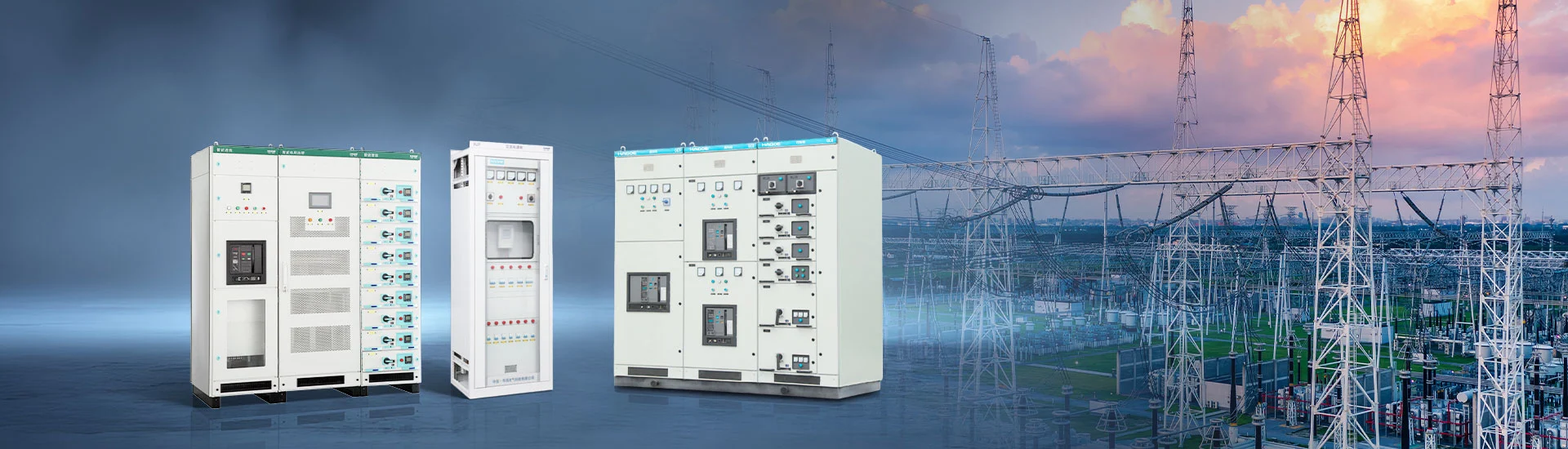
High Voltage Switchgear is a critical part of medium-voltage power distribution systems, providing the controlled interface between incoming power sources, transformers, feeders, motors, and downstream electrical networks.
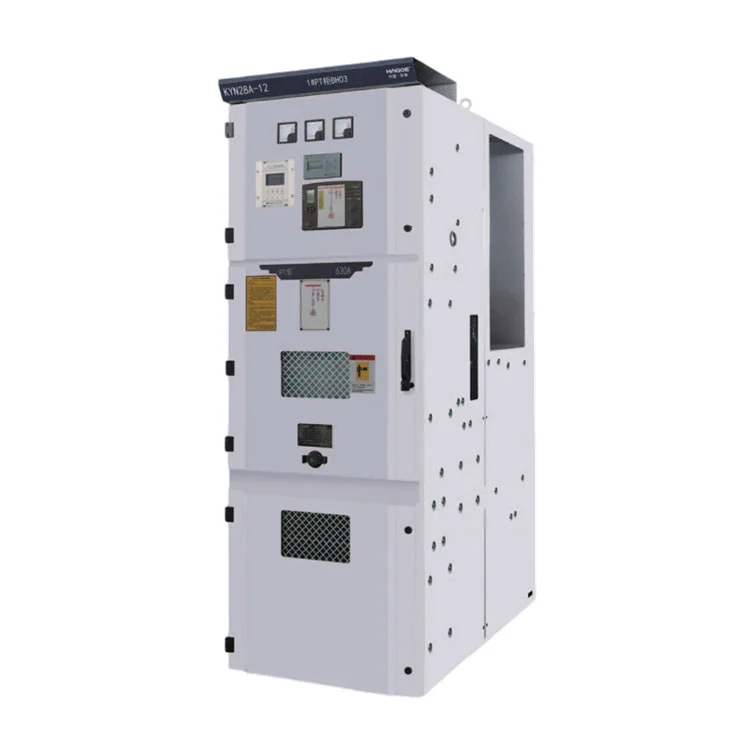
HAGOE Electric Technology Co., Ltd. provides 10kV High Voltage Switchgear and 35kV High Voltage Switchgear for substations, industrial power systems, power distribution networks, infrastructure projects, and other medium-voltage applications.
Unlike low-voltage switchgear, medium-voltage switchgear must address not only current distribution but also insulation coordination, short-circuit interruption, dielectric withstand, mechanical interlocking, protection coordination, grounding, and safe isolation.
The appropriate switchgear therefore needs to be selected from the electrical system design rather than from the cabinet name alone.
The main difference between 10kV and 35kV switchgear is obviously the system voltage, but engineering requirements change with the voltage level.
| Engineering Factor | 10kV High Voltage Switchgear | 35kV High Voltage Switchgear |
|---|---|---|
| Typical system role | Distribution network, industrial power distribution | Substation, primary distribution, higher-level power network |
| Typical application | Factories, buildings, utility distribution, motors | Substations, power plants, industrial main distribution |
| Insulation requirement | High | Higher |
| Switching equipment | Commonly vacuum circuit breaker | Commonly vacuum circuit breaker |
| Protection | Feeder, transformer, motor and bus protection | Feeder, transformer, bus and system-level protection |
| Short-circuit design | Project-specific | Project-specific and often more demanding |
| Space / clearance | Based on equipment design | Greater attention to insulation and clearances |
| System position | Often downstream distribution | Often closer to primary power transformation/distribution |
The final ratings should always be confirmed from the project short-circuit study, system voltage, load flow, protection coordination, and applicable standards rather than inferred from the nominal voltage alone.
In low-voltage distribution, electrical insulation is important, but in 10kV and 35kV systems it becomes a fundamental part of equipment design.
The required insulation level must consider operating voltage, phase-to-phase clearance, phase-to-ground clearance, creepage distance, dielectric withstand, and transient overvoltage conditions.
This is why the switchgear's insulation system cannot be separated from the selected voltage class and installation environment.
A switchgear rated for a certain continuous current does not automatically mean that it is suitable for every power system.
The prospective short-circuit current at the installation point needs to be determined first. This value affects the required circuit-breaker breaking capacity, short-time withstand current, peak withstand current, busbar design, and protection settings.
For example, 35kV-class switchgear may be available with different short-circuit breaking and withstand ratings. The appropriate value must be confirmed from the project's short-circuit calculation rather than selected from a general catalogue value.
This is one of the key differences between engineering-based switchgear selection and simple product matching.
The circuit breaker is only one part of the protection chain.
A complete medium-voltage switchgear system may involve protection relays, CTs, VTs, trip circuits, control power, measurement equipment, communication interfaces, and grounding arrangements.
For a transformer feeder, for example, the protection scheme needs to coordinate with the transformer rating and upstream/downstream protection. For an industrial motor feeder, motor starting characteristics and motor protection requirements become more important.
HAGOE therefore recommends confirming the protection architecture together with the primary switchgear configuration.
Medium-voltage equipment requires controlled operating procedures because incorrect switching can create serious electrical hazards.
Depending on the switchgear design, mechanical and electrical interlocking can be used to restrict incorrect operating sequences between the circuit breaker, earthing switch, compartment doors, and withdrawable components.
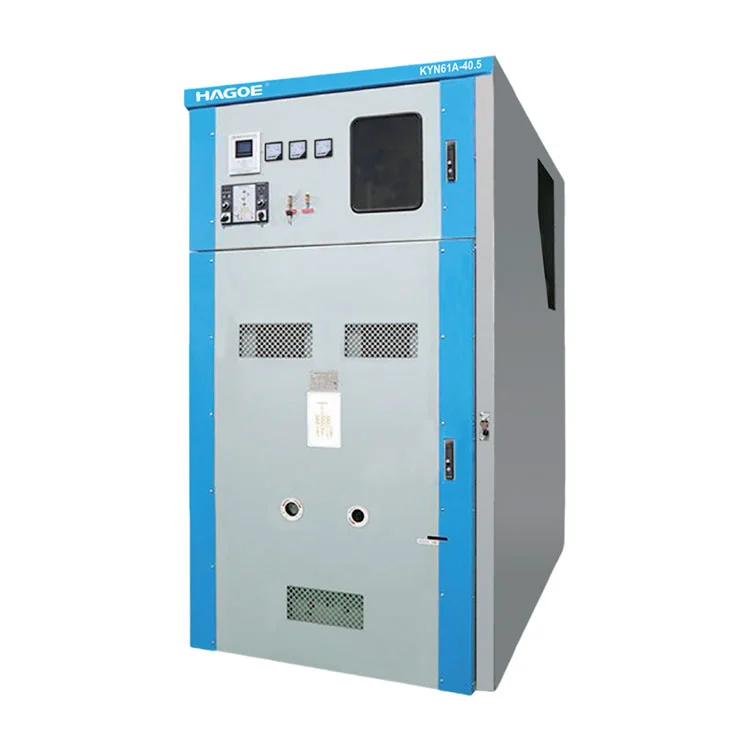
For KYN61-40.5 type metal-clad switchgear, five-prevention interlocking and compartmentalized construction are commonly incorporated into the equipment design. The exact arrangement depends on the selected product configuration and technical specification.
The purpose is not simply to add more mechanisms to the cabinet, but to establish a predictable operating sequence for switching, isolation, grounding, inspection, and maintenance.
For a project quotation, HAGOE's technical team first reviews the electrical system information available from the customer.
The most useful documents include the single-line diagram, system voltage, rated current, transformer capacity, short-circuit calculation, feeder quantity, protection requirements, CT/VT requirements, cable arrangement, installation conditions, and local standards.
This information allows the engineering team to determine whether the proposed configuration is suitable for the actual network instead of providing a generic cabinet specification.
A switchgear lineup for a substation does not necessarily have the same configuration as one used in an industrial plant.
A substation project may require incoming panels, transformer feeders, bus-section arrangements, metering, protection, and outgoing feeders. An industrial project may place greater emphasis on motor feeders, production-line loads, transformer distribution, and operational continuity.
HAGOE can therefore adjust the cabinet arrangement, circuit-breaker configuration, busbar capacity, CT/VT arrangement, protection devices, secondary wiring, metering, communication interfaces, and cable entry according to the project requirements.
HAGOE was established in 2008 in Wenzhou, Zhejiang, and has more than 18 years of experience in electrical equipment manufacturing.
The company's manufacturing resources include laser cutting equipment, CNC bending machines, automated punching equipment, SMT production lines, intelligent aging systems, and electrical testing equipment.
For switchgear manufacturing, these capabilities support accurate cabinet fabrication, component installation, wiring, mechanical assembly, and final inspection. Quality control is applied throughout the manufacturing process rather than relying only on the final appearance inspection.
HAGOE operates under ISO9001, ISO14001, and ISO45001 management systems, while applicable products can be designed and manufactured according to relevant GB and IEC requirements.
10kV and 35kV switchgear can be used for incoming power, transformer feeders, outgoing feeders, bus-section arrangements, and other switching functions within substations and utility distribution systems.
The configuration is determined by the substation single-line diagram and protection architecture.
Industrial facilities often require medium-voltage switchgear to supply transformers, large motors, production equipment, auxiliary systems, and downstream distribution panels.
HAGOE can configure the equipment around the facility's load characteristics and operating requirements.
Photovoltaic plants, energy storage facilities, transportation infrastructure, and other large electrical installations may also incorporate 10kV or 35kV distribution systems.
In these applications, the switchgear needs to coordinate with transformers, protection systems, power conversion equipment, and the grid connection arrangement.
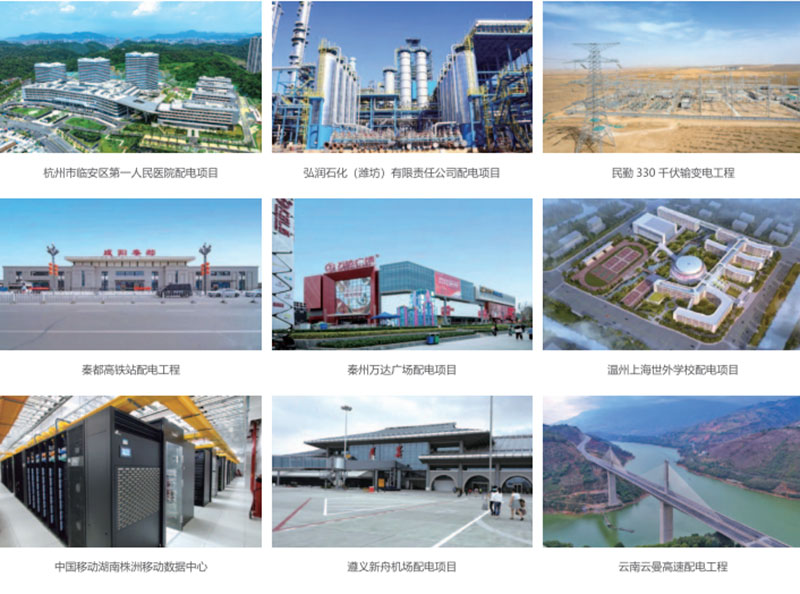
HAGOE has more than 18 years of experience across power distribution, DC power systems, UPS, industrial automation, and new-energy electrical equipment. This allows the engineering team to consider the relationship between high-voltage switchgear and the wider electrical system.
HAGOE does not rely solely on a standard catalogue model. The switchgear can be configured according to voltage, current, short-circuit level, protection requirements, feeder arrangement, transformer capacity, installation conditions, and project standards.
R&D, manufacturing, assembly, testing, sales, and export services are integrated within the company's business system. Manufacturing equipment and testing resources support the production and inspection of electrical cabinets and related equipment.
For overseas EPC contractors, distributors, and electrical contractors, HAGOE can support technical specifications, drawings, inspection documents, certificates, installation manuals, export packaging, logistics coordination, and remote technical assistance.
Rather than treating 10kV and 35kV as simply two product names, HAGOE evaluates their position within the customer's electrical network and configures the switchgear around the actual application.
The correct voltage level should be determined by the power network rather than by the switchgear catalogue.
For a 10kV project, the main questions usually concern distribution capacity, transformer and motor feeders, short-circuit level, protection coordination, and the number of outgoing circuits.
For a 35kV project, greater attention is generally required for primary distribution, insulation coordination, short-circuit performance, protection architecture, substation configuration, and system-level safety.
HAGOE can evaluate the available electrical drawings and technical data before recommending the appropriate switchgear configuration.
The objective is not simply to supply a 10kV or 35kV cabinet. It is to provide switchgear that fits the electrical system in which it will operate.