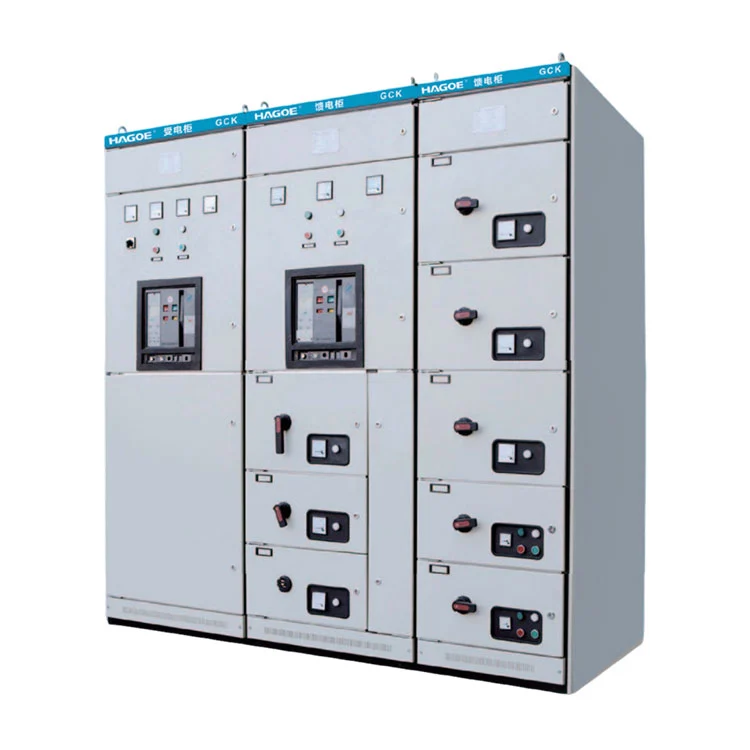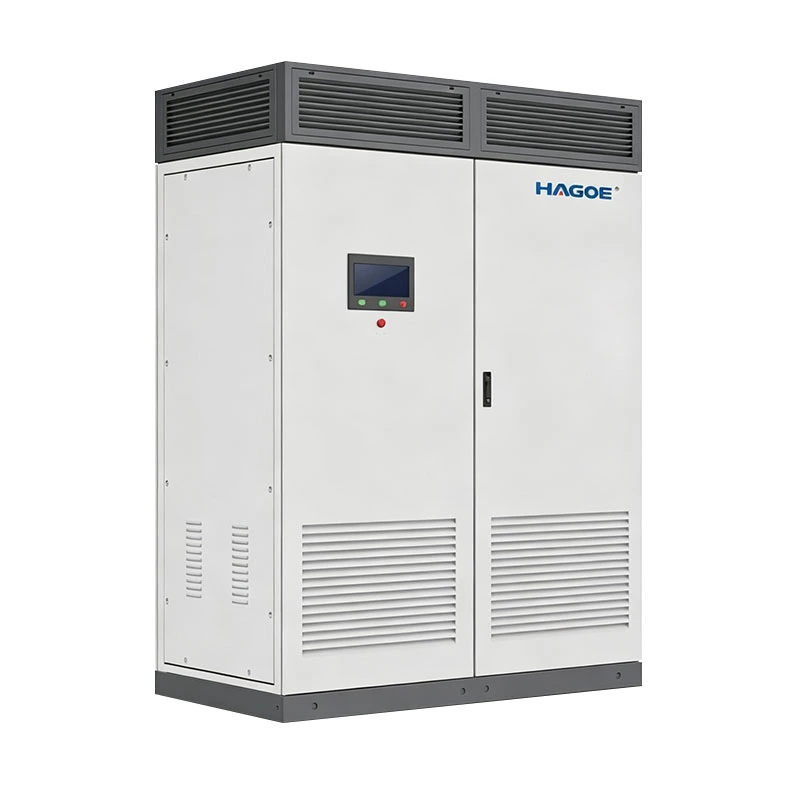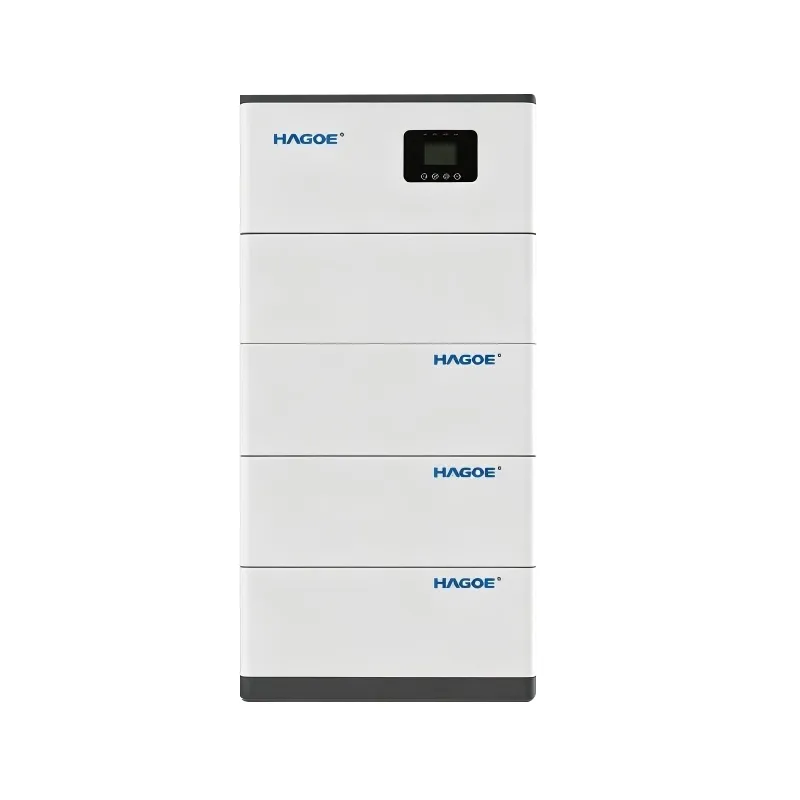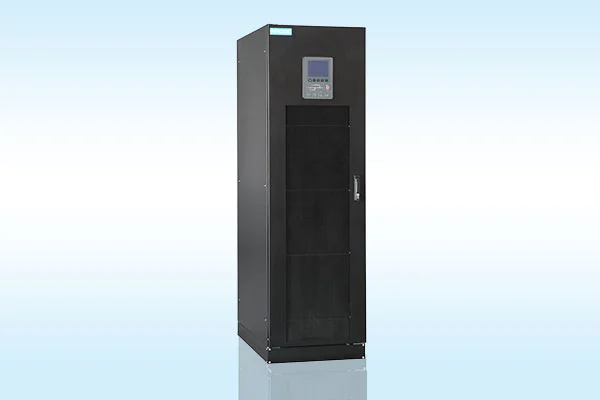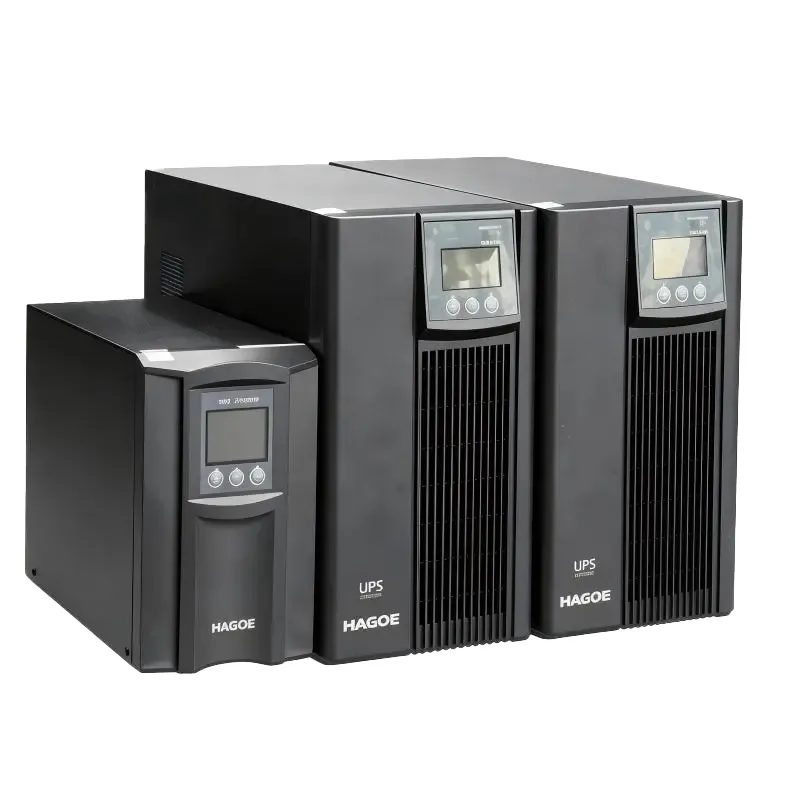
HAGOE provides a High Frequency Online UPS designed to protect sensitive electrical equipment from power interruptions, voltage fluctuations, and electrical disturbances. With online double-conversion technology, pure sine wave output, and flexible single-phase and three-phase configurations, these systems support reliable power protection for data centers, medical facilities, financial institutions, and precision industrial applications.
A High Frequency Online UPS continuously converts incoming AC power into DC and then back into regulated AC power, helping maintain a stable supply for critical loads. Compared with conventional standby UPS systems, its online architecture avoids the typical transfer interruption when utility power fails. HAGOE's HC, H3C, and H3C3 series cover different power requirements, from compact single-phase equipment to larger three-phase installations. Selecting the appropriate system requires evaluating connected load, power factor, battery runtime, input and output configuration, environmental conditions, and future expansion plans. This guide explains the operating principle, key advantages, technical specifications, application scenarios, and purchasing considerations that engineers and procurement teams should understand before choosing a UPS solution.
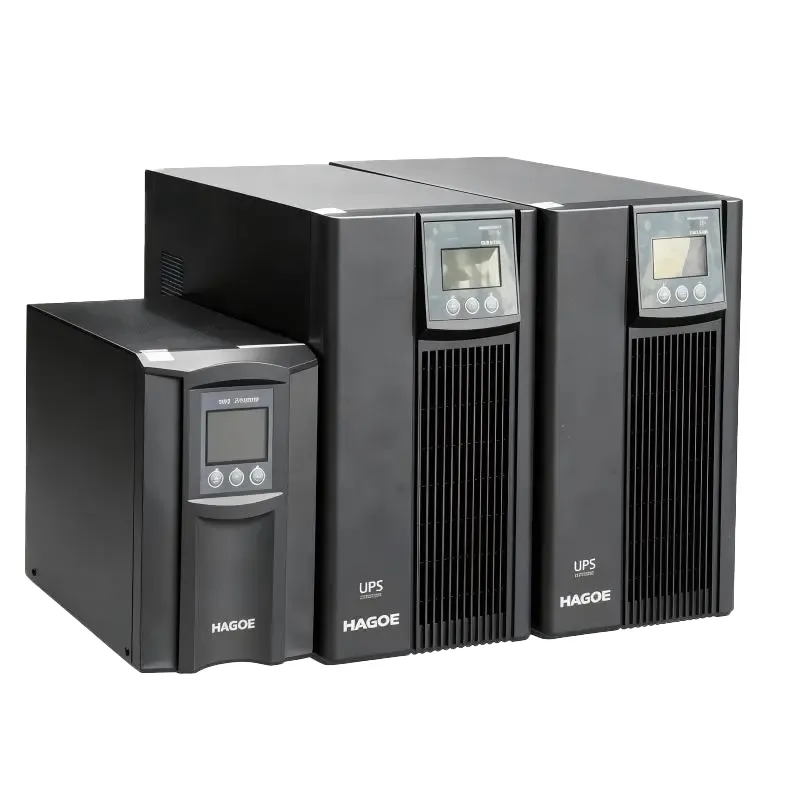
A High Frequency Online UPS is an uninterruptible power supply that uses high-frequency power conversion and an online double-conversion architecture to deliver regulated electricity to connected equipment. Unlike a standby UPS that normally supplies utility power directly to the load and switches to battery operation when an outage occurs, an online UPS continuously supplies the load through its inverter.
This operating method helps reduce the effects of voltage fluctuations, electrical noise, and other common power-quality disturbances. It is particularly valuable where even a brief interruption can cause data loss, equipment shutdown, production delays, or disruption to essential services.
HAGOE offers several configurations for different installation requirements:
These ranges provide options for small server rooms, commercial facilities, and larger power protection projects. The appropriate model depends on the electrical distribution system and the actual load requirements.
The main principle behind a High Frequency Online UPS is the continuous conversion of electrical power. Instead of relying on a mechanical or electronic transfer process after an outage, the inverter remains responsible for supplying the connected load during normal operation and battery operation.
HAGOE's product information specifies zero switching time from mains to battery for the listed online UPS models. Actual protection performance still depends on correct installation, battery condition, load characteristics, and operation within the specified ratings.
The inverter-based architecture provides regulated output voltage and a pure sine wave. HAGOE's listed single-phase models specify 220 VAC output with ±1% voltage regulation and a 50 Hz ±0.05% output frequency range in battery mode. These characteristics help protect sensitive electronic equipment from unstable supply conditions.
For applications such as server rooms, communication systems, and precision instruments, uninterrupted power delivery is essential. Because the inverter continuously supplies the load, the system avoids the typical transfer delay associated with conventional standby UPS operation when the mains supply fails.
HAGOE specifies a 45–55 Hz input frequency range for the listed series. Its smaller single-phase models also offer wide input voltage acceptance, depending on load and model. This can reduce unnecessary battery operation when utility voltage varies within the permitted range.
The listed product features include microprocessor control, RS232 communication, optional SNMP network monitoring, and multiple electrical protection functions. These capabilities help operators identify abnormal conditions and manage equipment more effectively.
Comparing rated capacity, output voltage, battery configuration, and phase requirements is essential when selecting an online UPS. The following table summarizes representative specifications published for HAGOE's HC and H3C3 product families. Confirm the final configuration against the exact model datasheet before procurement.
| Parameter | HC Series | H3C Series | H3C3 Series |
|---|---|---|---|
| Input configuration | Single-phase | Three-phase | Three-phase |
| Output configuration | Single-phase | Single-phase | Three-phase |
| Published capacity range | 1–10 kVA | 10–30 kVA | 10–100 kVA |
| Typical nominal voltage | 220/230 VAC optional | Confirm model configuration | 380/400 VAC configuration options should be confirmed for the selected model |
| Input frequency range | 45–55 Hz | 45–55 Hz | 45–55 Hz |
| Input power factor | >0.99 | >0.99 | >0.99 |
| Mains-to-battery switching | 0 ms specified | 0 ms specified | 0 ms specified |
| Communication | RS232; optional SNMP | Confirm selected model | Confirm selected model |
Important specification note: The HC series has detailed single-phase specifications available on the product page. For H3C and H3C3 models, verify the precise input and output voltage, communication interfaces, battery arrangement, and other model-specific values with HAGOE before finalizing a purchase.
UPS capacity is commonly expressed in both kilovolt-amperes (kVA) and kilowatts (kW). These values are related but not interchangeable. The kVA rating represents apparent power, while the kW rating represents real power available to the load. For example, the listed HC1K model is rated at 1000 VA / 800 W. Both ratings must be considered when estimating the total connected load.
Servers, network switches, storage systems, and monitoring equipment need stable power to reduce unexpected shutdowns and data loss. An online UPS supports power continuity and can integrate with remote monitoring systems for more efficient maintenance.
Electronic medical systems, diagnostic instruments, and laboratory equipment may be sensitive to electrical disturbances. Properly specified UPS protection can support equipment availability, although critical medical applications must also comply with relevant facility and equipment requirements.
Payment terminals, transaction servers, office networks, and business communication systems depend on continuous electrical power. Battery backup can help bridge short outages and provide time for controlled shutdowns during extended interruptions.
Control computers, measurement systems, and sensitive automation electronics can be affected by power disturbances. A suitably sized UPS helps maintain stable power for these loads. Applications involving large motors, heavy inrush currents, or demanding industrial environments require additional load analysis before selecting a model.
Choosing the correct High Frequency Online UPS involves more than matching the total wattage of connected devices. Engineers should evaluate the operating environment, power characteristics, required runtime, and plans for future expansion.
HAGOE's product guidance notes that the standard battery backup time for listed standard models is no more than 15 minutes. Longer backup periods may require a suitable extended-battery configuration. Actual runtime should be confirmed for the intended load and battery arrangement.
Reliable performance depends on proper commissioning and regular inspection, not only on the UPS specification. A maintenance plan helps identify battery deterioration, blocked ventilation, abnormal alarms, and changing load conditions before they affect operation.
For larger installations, confirm whether bypass arrangements, redundant UPS units, or additional distribution equipment are needed to support maintenance without interrupting critical operations.
An online UPS continuously supplies the load through its inverter using double conversion. A standby UPS generally supplies utility power directly during normal conditions and switches to battery operation when a power problem occurs. The online architecture avoids the typical transfer interruption associated with standby systems.
HAGOE lists the HC series at 1–10 kVA for single-phase input and output, the H3C series at 10–30 kVA for three-phase input and single-phase output, and the H3C3 series at 10–100 kVA for three-phase input and output.
HAGOE specifies a 45–55 Hz input frequency range for the listed product families. Generator suitability must also be evaluated against voltage regulation, frequency stability, generator capacity, and the specific UPS model's input requirements.
No. Backup time depends on battery capacity, connected load, battery condition, and system configuration. Extended runtime may require additional compatible batteries and a suitable charging arrangement.
The listed HC models support RS232 communication and intelligent monitoring software, with an optional SNMP adapter for network management. Confirm the available interfaces for the exact model before ordering.
Prepare the connected load list, required backup time, input and output voltage, phase configuration, generator details, and operating environment. HAGOE can use these requirements to help identify a suitable capacity and configuration.
A High Frequency Online UPS is a practical choice for facilities that need stable output power, battery-backed continuity, and protection for sensitive electronic loads. Its suitability depends on correct capacity selection, electrical compatibility, battery planning, and ongoing maintenance. HAGOE's HC, H3C, and H3C3 series provide different configurations for applications ranging from compact IT installations to larger three-phase systems.
If you are planning a new installation or upgrading an existing power protection system, visit the HAGOE High Frequency Online UPS product page to review the available models. Share your load requirements, preferred voltage, phase configuration, and expected backup duration with the engineering team. Contact us today to discuss model selection, battery sizing, technical specifications, and a tailored UPS solution for your application.